Concept project · Wellbeing · 2 week sprint
Balance
A 2 week design sprint for the meditation app Balance. In this project I worked in a team of four. Myself, Leo Wong, Alina Tamciuc, India Berrow.
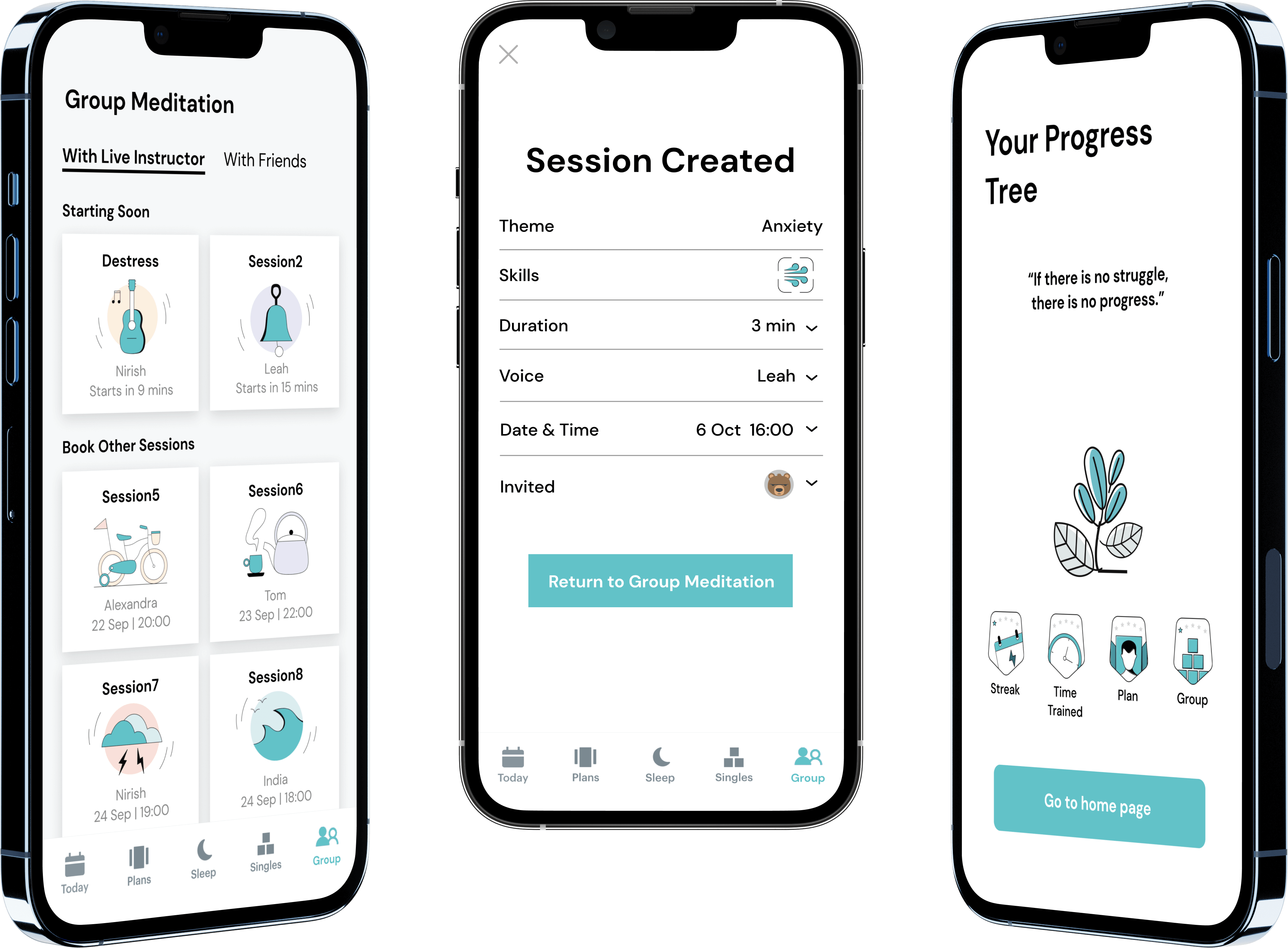
The client
Who are Balance?
Balance is a meditation app that offers personalised meditation programs based on the meditator’s experience and needs.
The brief
Brief
Balance believes that new meditators find meditation to be difficult and frustrating because their minds get distracted more easily during meditation, preventing them from enjoying the practice and creating a regular habit. Balance are considering partnering with Muse who make wearable brain sensing headbands, devices that measure brain activity using electroencephalography (EEG) sensors.
Objectives
Discover
Competitive / Comparative Analysis
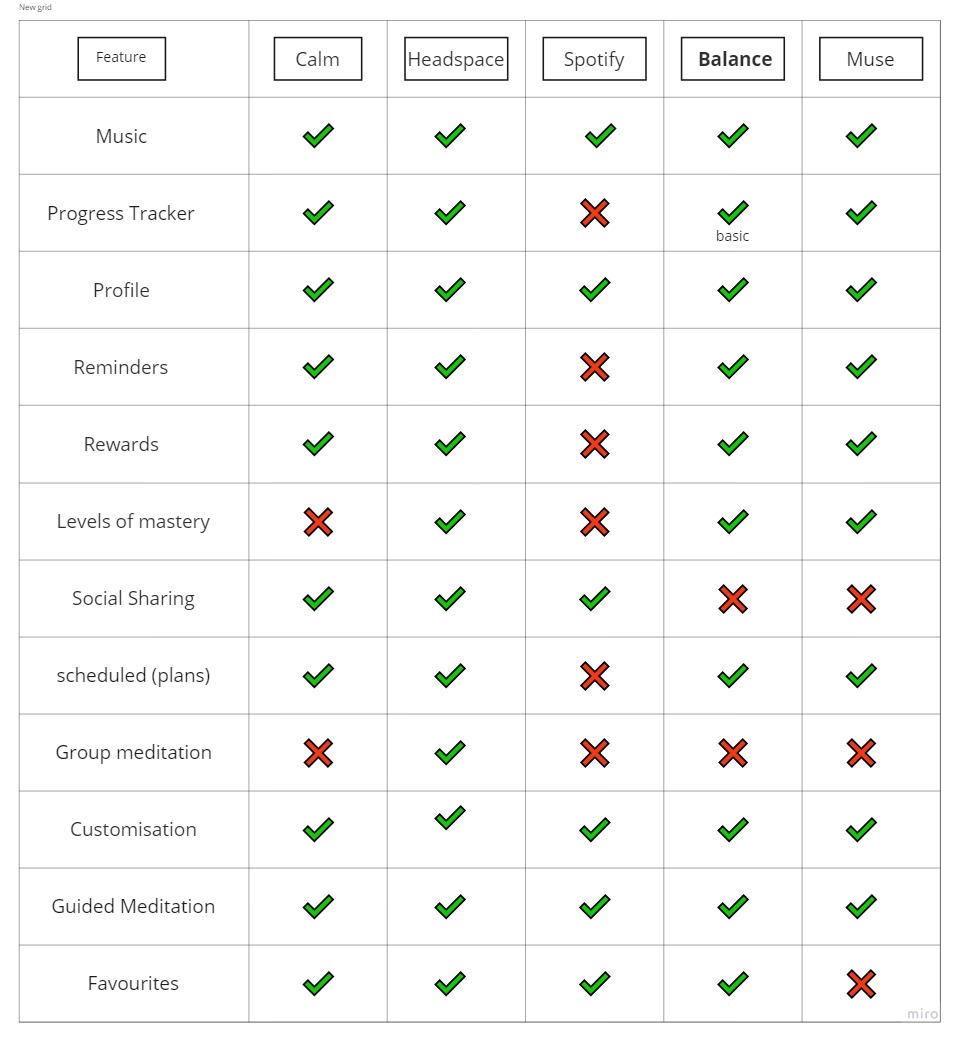
To kick things off we went ahead by doing some research about the meditation app industry. We created a feature inventory to see what competitors have to offer and compared it with Balance. We learned that Balance offers most of the features apart from Social Sharing and Group Meditation.
Explore
User Interviews
We interviewed 6 users to understand the problem users are facing.
Interview insights
Persona
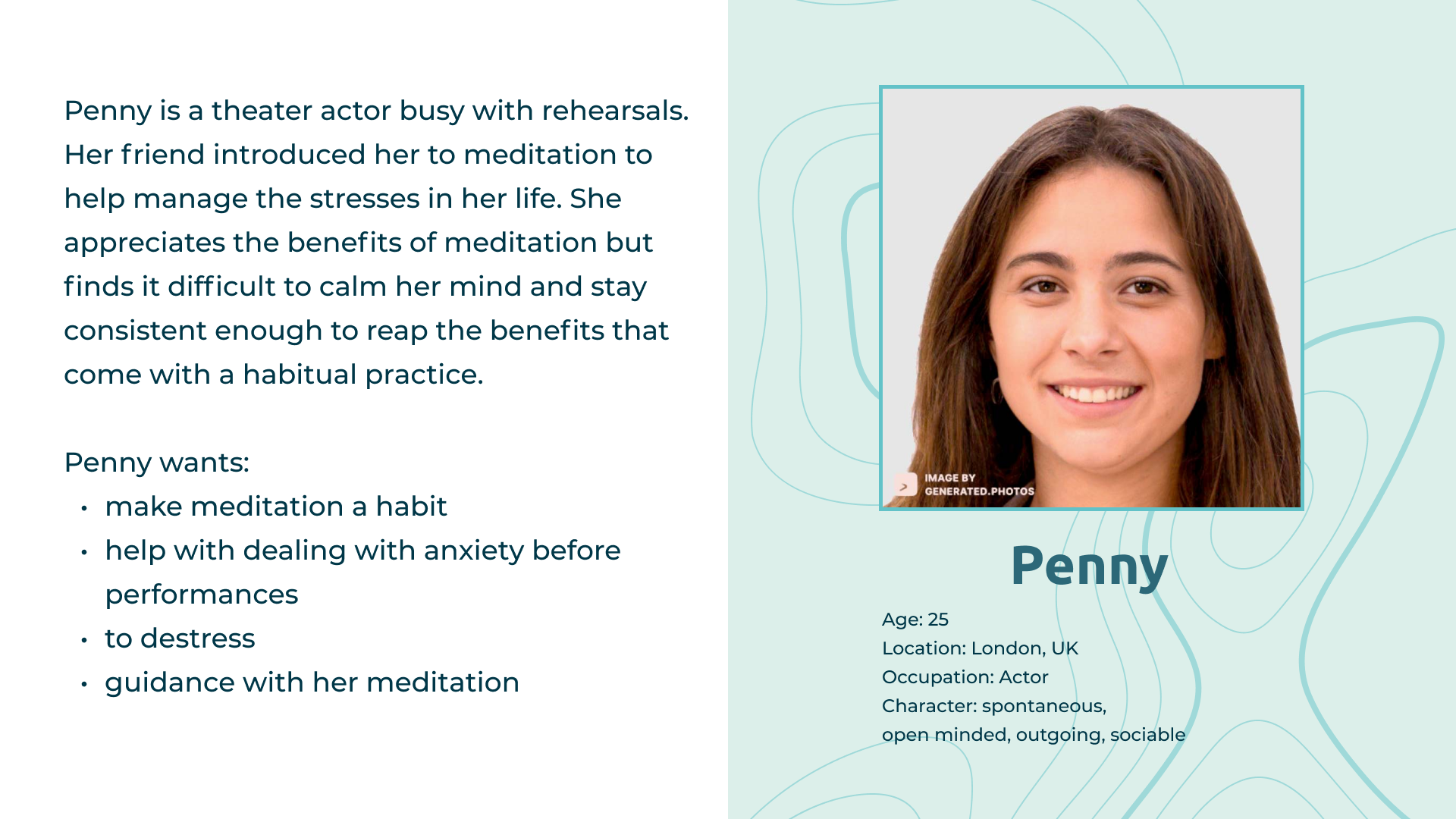
Created a persona “Penny” based off insights from research and interviews.
Problem statement
Penny wants to make meditation a habit to experience the benefits of a consistent practice, but finds it hard to commit.
How might we…
Brainstormed some HMW’s to give ideas on how to help Penny.
Develop
Design Studio
We got together and did a design studio bringing our ideas to light on how we each would solve Penny's problem. Voting on our favourite ideas which we would bring forward to the next stage of the process creating the low-fidelity prototype.
User Flow
Making a user flow was useful to show Penny's journey through the new feature on the Balance app we are trying to create.
Low-Fidelity and User Tests
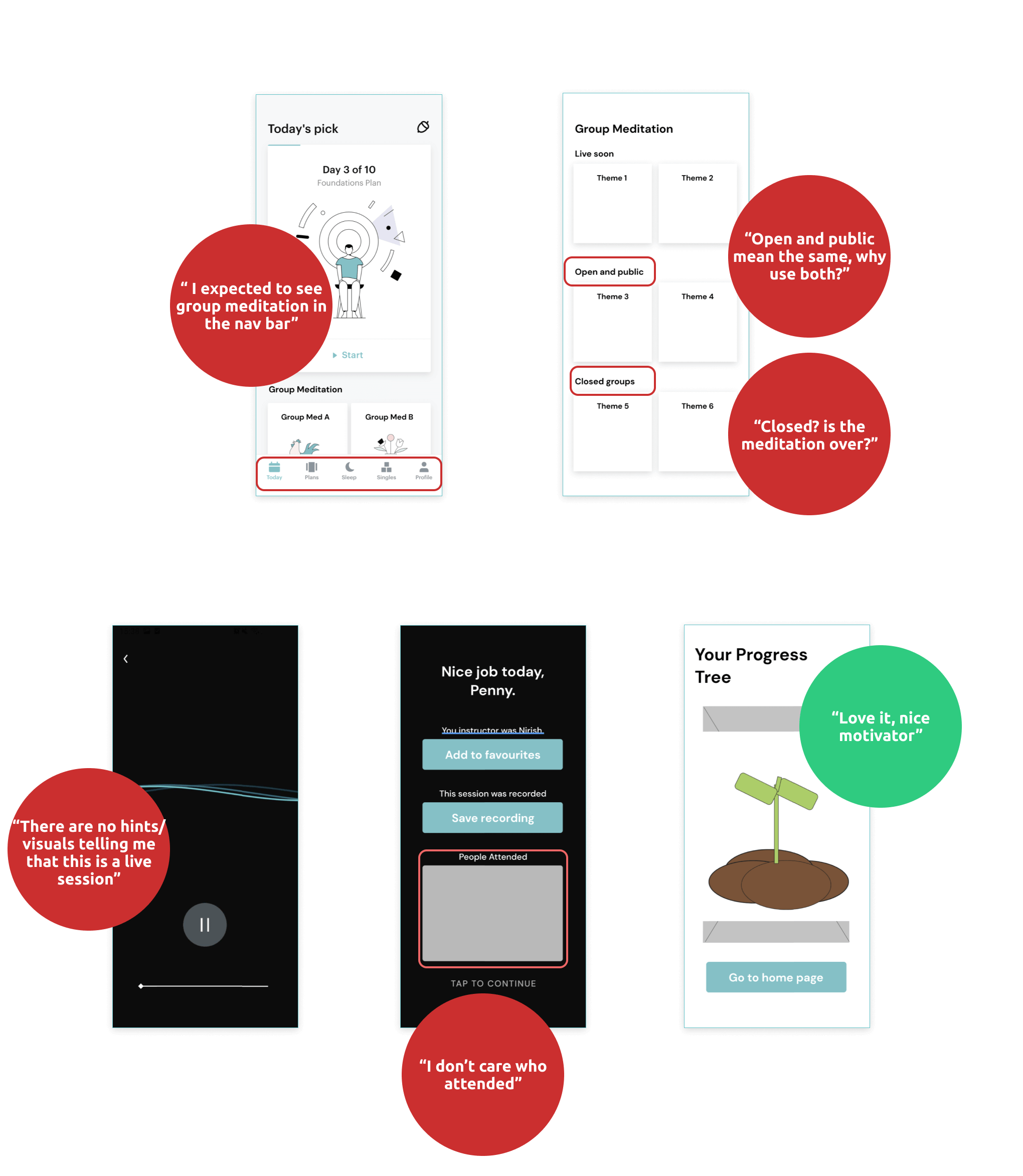
Always so interesting moving from sketches to low-fi however due to us using the Balance app as a base we ended up being in a mid-fi instead of low-fi stage.
Deliver
Mid-Fidelity to High-Fidelity
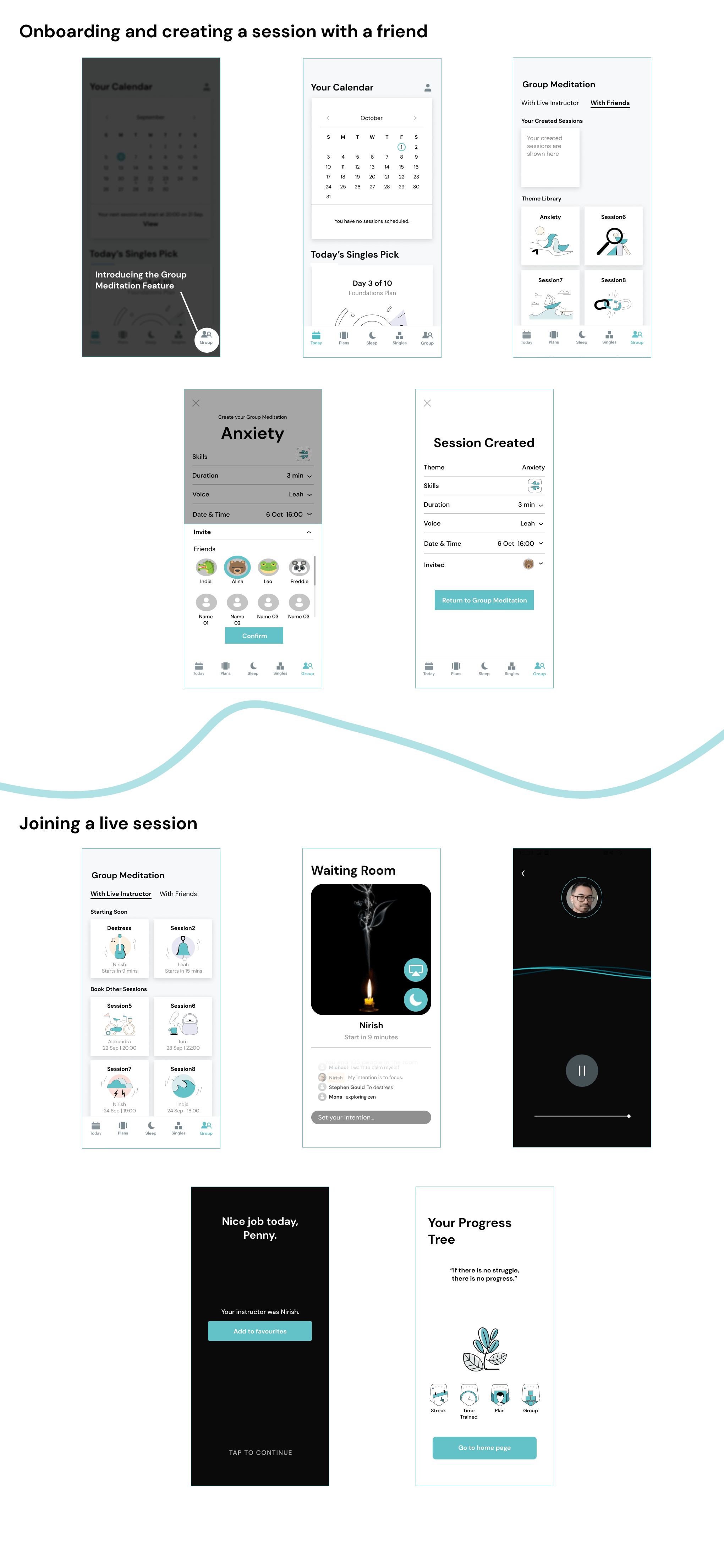
Due to our first design being more mid-fi we made adjustments to it based on the feedback we received and converted it to high-fi. Below are some of the screens from both paths Penny takes.
Testing High-Fidelity
We tested the high-fi prototype after implementing the feedback we received from the previous tests.
Reflection
Summary
Moving forward
Takeaway
I learned so much during this 2 week sprint, mostly to test as much as possible. I feel we missed out on testing in the earlier stages and went to mid-fi too fast, something I will take forward in other sprints.